In short: A crash involving an Uber or Lyft driver is an ordinary Illinois injury claim with an extra question on top: what was the driver doing in the app at the moment of impact? The answer decides which insurance policy applies and how much coverage there is. From the time a driver accepts a ride until that ride ends, Illinois law requires $1,000,000 in primary liability coverage. Outside that window, the coverage is much smaller.
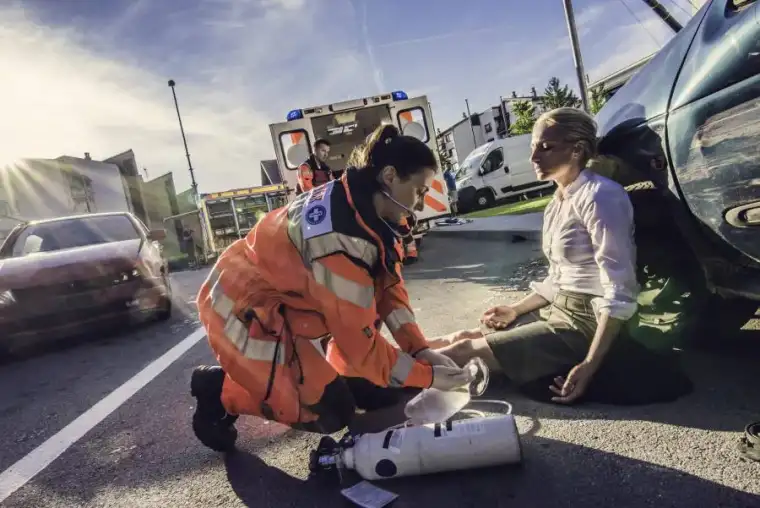
The question that decides everything: what was the app doing?
Rideshare drivers use their own cars, and their own personal auto policies almost always exclude driving for hire. Illinois addressed that gap in the Transportation Network Providers Act, which sets insurance requirements that change with the driver's status.
| Driver's status | What it means | Coverage that applies |
|---|---|---|
| App off | The driver is using the car for personal reasons | The driver's own personal auto policy, like any other driver |
| App on, waiting for a request | Logged in and available, no ride accepted | A lower tier of liability coverage required by the Act. The driver's or the company's policy may provide it |
| Ride accepted, on the way to the pickup | The driver has taken a request | $1,000,000 in primary liability coverage for death, injury and property damage |
| Passenger in the car | From pickup until the ride ends | The same $1,000,000 |
That table is why the first thing I do in a rideshare case is lock down the trip data. The app records when the driver logged in, when a request was accepted, the route and when the ride ended. The company has it. The driver's memory of whether the app was on is not something I rely on.
Who you are in the crash changes the claim
You were a passenger in the Uber or Lyft. You are almost never at fault. If your driver caused the crash, the claim is against the driver and the rideshare coverage that was in force during your ride. If another driver caused it, the claim is against that driver, and if that driver had too little insurance or none, the uninsured and underinsured motorist coverage that comes with the rideshare policy may apply to you.
You were in another car, on a motorcycle or on a bike. Your claim against the rideshare driver works like any other crash claim. The difference is which policy answers, and that depends on the app.
You were on foot. Pickups and drop-offs put drivers in bike lanes, bus stops and travel lanes, watching a phone for the next rider. Pedestrians are hit in exactly those spots. See pedestrian accidents.
You are the rideshare driver. If someone else hit you, you have a claim against that driver. While you had a passenger or an accepted ride, the company's uninsured and underinsured coverage may protect you too. Whether you have a workers' compensation claim depends on whether you are treated as an employee or an independent contractor, and that question is being argued across the country.
Can you bring a claim against Uber or Lyft itself?
Sometimes, and this is the part of the law that is moving.
The companies' position has always been that drivers are independent contractors and that the company is a technology platform, not a transportation company. On that view, the company owes you the insurance the statute requires and nothing more.
Two things cut against that position in Illinois.
First, a company can be responsible for its own carelessness: putting a driver on the road with a record that should have disqualified him, or ignoring complaints about a driver.
Second, the statute used to say outright that rideshare companies and their drivers are not common carriers. A common carrier, such as a bus line or a taxi company, owes passengers the highest degree of care and answers more broadly for what its drivers do. An Illinois appellate court relied on that statutory language in 2020 to hold that a rideshare company could not be held to the common-carrier standard. The legislature then amended the Act so that the exemption stopped operating on January 1, 2024. The amendment removed the shield. It did not declare that rideshare companies are common carriers, and courts are still working out what follows.
This is an area of the law in flux, and changes are happening monthly to yearly. Check with our firm or another competent firm to go over your options and whether any change will affect your case.
What makes these cases harder than they look
- The driver may say the app was off. Drivers worry about losing access to the platform, and some will tell an officer or an insurer they were driving for personal reasons.
- Two or three insurers point at each other. The driver's personal carrier denies because of the for-hire exclusion. The rideshare insurer says the app wasn't in the right status. Nobody pays until someone makes them.
- The data sits with the company. Trip logs, GPS, the driver's account history and prior complaints are in the company's hands. A preservation letter should go out immediately.
- Passengers assume it's handled. The app offers a button to report a crash. Reporting it there is fine. It is not the same as making a claim, and the adjuster who calls you afterward works for the insurer.
What to do after a rideshare crash
- Call 911 and make sure a police report is made. Ask the officer to note that the vehicle was a rideshare.
- Take screenshots. Your ride in the app, the receipt, the driver's name, the car and the plate. Do it before you close the app. The trip can become harder to find later.
- Photograph the cars, the scene and the trade dress, the sticker or light that identifies the car as an Uber or Lyft.
- Get the names and insurance information of every driver, not just yours.
- Get medical care the same day.
- Report the crash through the app, and tell your own auto insurer too. Your policy has its own reporting deadlines.
- Don't give a recorded statement to anyone's insurer before you've talked to a lawyer.
Rideshare crashes around Rockford
Uber and Lyft are busiest here in the places you'd expect: the bars and restaurants downtown and on East State, the casino, the BMO Center on event nights, the hospitals, Chicago Rockford International Airport and the Van Galder bus stop for people heading to O'Hare. Late-night pickups mean tired drivers and drunk drivers on the same roads at the same hours.
I also see these cases from Belvidere, Loves Park and Machesney Park, where a driver may have come from Rockford or from the suburbs and may not know the roads.
What a claim can recover
The same things as any Illinois injury claim: medical bills and future care, lost income, pain, disability, disfigurement and loss of a normal life. The $1,000,000 requirement matters most in serious cases, because it means there is real coverage where an ordinary driver might carry only the state minimum.
Deadlines
Two years for most injury claims in Illinois. Uninsured and underinsured motorist claims run on the deadlines in the policy, which can be much shorter. If you were a passenger hurt by a driver who then couldn't be identified, read my page on hit and run crashes and report promptly.
Common questions
My Uber driver wasn't at fault. Does the rideshare insurance still help me?
It can. If the driver who caused the crash had too little insurance, the uninsured or underinsured coverage attached to your ride may make up some of the difference.
I was hit by a driver with a Lyft sticker, but he says he was off the clock. What now?
The trip data answers that, not the driver. I request it from the company. If he was logged in or on a ride, the rideshare coverage applies.
Do I have to deal with Uber's insurance company myself?
No, and I'd suggest you don't. Once you hire me, the insurers talk to me.
Does my own car insurance matter if I was only a passenger?
It might. Your own policy's medical payments and underinsured motorist coverage can apply even when you weren't driving.
What does it cost?
Nothing up front. I work on a contingency fee and I'm paid only if there is a recovery.
Reviewed by attorney Paul M. Marriett, licensed in Illinois and Wisconsin. Last updated November 27, 2026.